sábado 10 de diciembre de 2011

La poesía como herramienta

La poesía como herramienta para el conocimiento de la realidad. 

©ClaudioSerraBrun - Sabado 10Diciembre2011.  poesur@gmail.com - www.poesur.com


Vemos ahora a los jerarcas dándose abrazos, copiándose las fórmulas demagógicas para perpetuarse en el poder, escenificar la nueva manipulación de la historia de cada país, sustituyendo a personajes históricos como a figuras en un teatro de sombras: Vemos las tácticas de Gramsci, Goebbels y Mussolini mezcladas para la ocasión y metidas en el alambique de los propagandistas y los consultores tecnócratas, contratados por el partido en el gobierno...
Para hacer un retrato desde lo poético del estado de cosas en el que se debate la sociedad de hoy, antes que nada habría que despojarse de los varios filtros ideológicos que nos persiguen como en una pesadilla. En primer lugar, las certezas de nuestra vestimenta social, nuestra habilidad aprendida de ver las cosas y su causa y consecuencia, tal como dicta nuestra cultura y nivel social.
El reprimido, el represaliado, el pobre, el clase media, el rico, cada uno puebla ese espacio de sombras que es la vida, con las propias figuras moldeadas en los años de aprendizaje.
Luego hay que sumar las infinitas variaciones de la mente humana: Las neurosis, las psicopatías, los sicóticos y los psicópatas que en distinto grado de perversión pueblan los niveles de la sociedad, como de la cultura, las artes, y las esferas más encumbradas del poder en cada uno de los países. Basta abrir un tratado de historia universal para comprobar la generalidad de esta aseveración.
Cómo se emprende tamaña aventura, de intentar acertar en el retrato del tiempo que vivimos?. La mejor manera de preparar este duro periplo es consultar a los grandes maestros del arte y la filosofía: Borges, Nietzsche, Shakespeare, Cervantes, Dante, y todos los clásicos: cada uno extenderá su  luminosa verdad sobre nuestro atribulado corazón, acosado por las dudas y la desconfianza que genera este escenario de cartón piedra que es la suplantación de la democracia por la demagogia, tal como podemos comprobar en nuestras repúblicas (ahora "populistas") latinoamericanas.
Dejo estas líneas con las prisas que la tarde de verano impone, la televisión ordena, y la vida exige, para que en otra ocasión nos adentremos en los queridos textos de nuestros mayores, siempre presentes en el corazón, siempre vigentes a pesar de los recortadores de la historia de los pueblos.
Hasta pronto.
©ClaudioSerraBrun
Buenos Aires, Sabado 10 Diciembre 2011
poesur@gmail.com - www.poesur.com
--

jueves 11 de agosto de 2011

Don’t cry for me, Argentina, that we are crying for you. No llores por mi Argentina, que nosotros lloramos por ti.

By PoeSur - PoemSouth

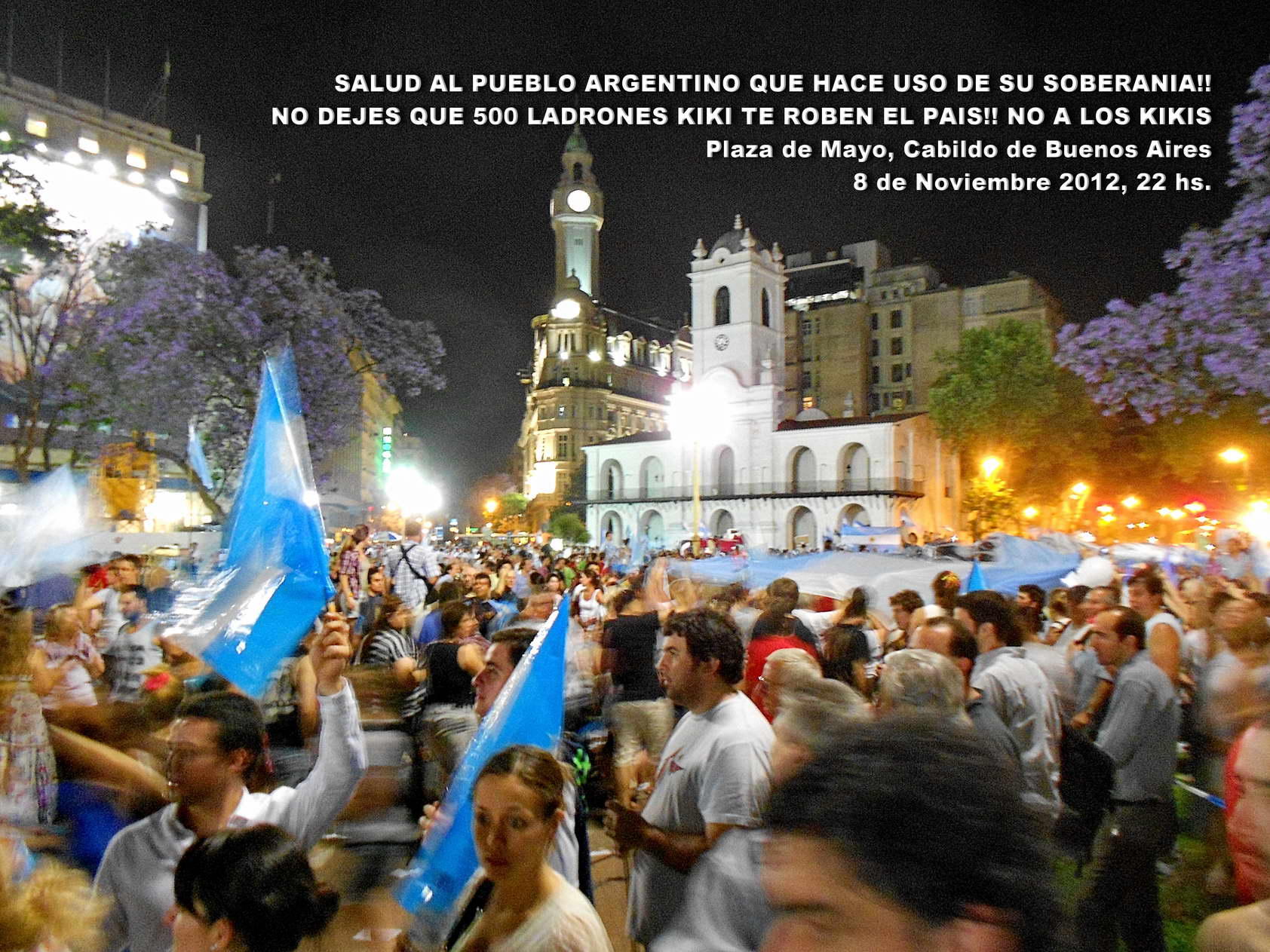
¿Qué pasa en Argentina? ¿es que nadie pone el grito en el cielo tan hermoso de la Patria, para denunciar a la mafia en el poder? ¿Nadie se atreve a decir en voz alta el estado de corrupción en que está sumida la estructura estatal, agravada hasta lo increíble por los años que lleva la banda KiKi en el gobierno? Claro que hay voces, y muchas, y cientos de miles de votos que en las provincias están derribando la hegemonía KiKi.

La crisis de Argentina se alarga en el tiempo, y los actores son figuras repetidas en el mapa político, escudados tras el mascarón de proa del peronismo. Desde hace años que la lenta decadencia del peronismo arrastra en su caída a todos los sectores sociales relacionados directamente con el aparato de gobierno. Fundaciones, ONGs, planes de viviendas, obras públicas, contratistas del Estado, administradores de juegos, directores de empresas proveedoras, recaudadores, empresas subsidiarias, y por supuesto cúpulas sindicales, prensa subvencionada, y toda la camarilla de amigos del poder de turno: Todos estos estamentos están tocados por la corrupción instigada por la estrategia KiKi de compra de voluntades para perpetuarse en el poder.

Para cualquier displicente de izquierdas, como el presidente de Uruguay y ex tupamaro José Mujica, asentir y festejar aquella frase del ex presidente de Uruguay en 2002, José Batlle, de que “Los argentinos, son todos una manga de ladrones”, ya sirve de explicación y retrato para todo un pueblo.
No hay que asombrarse de tanta desfachatez, porque desde siempre la izquierda despreció, difamó, injurió y, cuando estuvo en el poder, aniquiló al pueblo que no estaba de acuerdo con sus ideas.

Pero el pueblo inmenso, el pueblo en general del país, el ciudadano silencioso de Argentina, aquél que habita los escenarios en donde el país y la vida se construyen día a día, este ciudadano permanece en silencio ante todos estos insultos. Aquél que trabaja, y sigue cada día, y persiste, pese a la angustia, no quiere ver, no quiere considerar la magnitud del latrocinio que lleva a cabo el KiKismo.

Parece que nadie se hace idea del sufrimiento causado en el Sur
por las cenizas del volcán Puyehue, que dispersa por el viento millones de toneladas de ceniza que causan una hecatombe económica y social para media Patagonia. Un millón de ovejas condenadas, ni su lana ni su carne servirán. Pueblos enteros con la angustia de la crisis económica y social que esto acarrea. Este gobierno corrupto no es capaz de enviar al ejército para ayudar en las provincias, ayudando con convoyes y ayudas de a miles de hombres, que esta hecatombe requiere.

Pasó así con la crisis del campo en el 2010, pasa con los 10 millones de argentinos carenciados, pasa ahora mismo con la mafia de las viviendas populares, adjudicadas a dedo y construídas por empresas mafiosas en connivencia con la ONG más famosa de Argentina.
El desprecio del gobierno KiKi al pueblo es inaudito, clama un cambio y posterior enjuiciamiento, cuando todo el aparato mafioso quede sin las prebendas, el dinero del Estado ni el escudo de los fueros.

Este domingo 14 de Agosto comienzan las elecciones que pueden derribar la corrupción y erigir un gobierno acorde al estado de Derecho.
La Argentina decente, sufrida y trabajadora lo desea, se lo merece.
Como una alborada silenciosa, que lo inunde todo. Como el amanecer infinito y radiante de la Pampa.

©ClaudioSerraBrun,12Agosto2011. España -Argentina. www.poesur.com poesur@gmail.com

Puede reproducir los textos propios, solo citar Poesur, el link y el Autor.You may reproduce these texts for cultural purposes, but only if you cite the source and the author plus the links for Poesur: Auteur et Éditeur:©Claudio Serra Brun. La reproduction des textes est autorisee, veuillez citer la source et l'Auteur et le site "Poesur." . poesur@gmail.com http://www.poesur.com/
-

©ClaudioSerraBrun,12Agosts2011. España -Argentina. www.poesur.com poesur@gmail.com

Puede reproducir los textos propios, solo citar Poesur, el link y el Autor.You may reproduce these texts for cultural purposes, but only if you cite the source and the author plus the links for Poesur: Auteur et Éditeur:©Claudio Serra Brun. La reproduction des textes est autorisee, veuillez citer la source et l’Auteur et le site “Poesur.” . poesur@gmail.comwww.poesur.com

Publicado por ClaudioSerraBrun www.poesur.com en 22:03

-

What is happening in Argentina? Is anyone puts the scream in the sky so beautiful of this country, to denounce the mafia in power? Nobody dares to say aloud the state of corruption that has engulfed the state structure, aggravated beyond belief for years that the band “KiKi” in government? Of course there are voices, and many, and hundreds of thousands of votes in the provinces are breaking the hegemony KiKi.

Argentina’s crisis is prolonged in time, and actors are repeated figures on the political map, shielded by the figurehead of Peronism. Years that the slow decay of Peronism drag in its fall to all social sectors directly related to the steering gear. Foundations, NGOs, housing schemes, public works, government contractors, managers game, managers of supplier companies, collectors, subsidiaries, and of course, union leaders, media project, and the whole clique of friends of the power shift: All these estates are touched by corruption strategy instigated by KiKi purchase intentions to perpetuate himself in power.

For any careless leftist men, as the president of Uruguay and former Tupamaro José Mujica, nodding and celebrating the phrase the former president of Uruguay in 2002, José Batlle, that “Argentines are all a bunch of thieves,” this phrase serves by explanation and picture for an entire people.

No wonder so much audacity, because the leftists has always despised, vilified, reviled, and when in power, destroyed the people who disagreed with his ideas. (Remember the “purges” of Stalin, Mao’s Cultural Revolution, 50 years of Castro, the Berlin Wall, etc.)

But the immense people, the people of the country in general, the silent citizens of Argentina, one who inhabits the stage where the country and life are built every day, this citizen remains silent over all these insults. One that works and continues every day, and persists despite the anguish, not wants to see, does not want consider the magnitude of thievery that takes place in the KiKism gov..

It seems that no idea of ​​the suffering is caused in the South from the ashes of the volcano Puyehue, dispersed by wind in million tons of ash producing an economic and social catastrophe for half Patagonia. A million sheep are condemned and its wool or meat are unusable. Entire villages in the throes of economic and social crisis that it entails. The corrupt government is not able to send the army to help the provinces, helping convoys and aid to thousands of men, that this disaster requires.

Happened that way with the farm crisis in 2010, about 10 million needy Argentines, happening right now with the mafia-income housing, awarded to toe and built by companies in collusion with the Mafia’s most famous NGO Argentina.

The KiKi government’s contempt to the people is unheard cries for change and subsequent trial, when the whole gov. apparatus left without the perks mafia, money from the state or the shield of the legislative jurisdictions.

On this Sunday August 14 elections can start a breaking down of corruption, and build a government according to the rule of law.

Argentina is decent, suffering and working you want, you deserve it.

As a silent dawn, it flooded everything. As the infinite, radiant sunrise of the Pampas.

-

©ClaudioSerraBrun,12Agosts2011. España -Argentina. www.poesur.com poesur@gmail.com

Puede reproducir los textos propios, solo citar Poesur, el link y el Autor.You may reproduce these texts for cultural purposes, but only if you cite the source and the author plus the links for Poesur: Auteur et Éditeur:©Claudio Serra Brun. La reproduction des textes est autorisee, veuillez citer la source et l’Auteur et le site “Poesur.” . poesur@gmail.com www.poesur.com

Publicado por ClaudioSerraBrun www.poesur.com en 22:03 Tags: argentina, buenosaires, claudioserrabrun, iberoamerica,Latinamerica, PoemeSud, PoemSouth, poesur, SouthAmerica, Sur,Tango

viernes 21 de noviembre de 2008

El fantasma del fascismo vive en el socialismo.

http://www.youtube.com/watch?v=3yoTQSKsfDA

El ideario socialista: La Propaganda y sus fantamas. 

El 20-Noviembre es para España la fecha de la muerte de Franco (1975), el dictador fascista que gobernó casi 40 años, luego de ganar la Guerra Civil que desangró el país durante tres años. Esa fecha fue siempre el puntal de algunas maniobras nostálgicas de la ultraderecha española, un sector cada vez más reducido a medida que avanzaban los años de la democracia, 1977 en adelante. Hoy en día, no pasan de ser un grupo minoritario, disperso entre algunas patotas de fanáticos de futbol. Y entre los jóvenes españoles, menores de 25 años, ya nadie se acuerda qué es el 20-N, y a casi nadie de ellos le interesa, ni ha visto ni reconoce el monigote antiguo de Franco. 
Para nosotros, los mayores de 40 ó 50, la cosa cambia, la historia está ahí, se conoce y se palpa a cada paso. Durante los fervorosos años de la Transición Española, 1975-1977, cada uno de nosotros fue testigo de un cambio vertiginoso de la sociedad y las ideas. Muerto el dictador, aquél 20-N de 1975, muy pronto el espíritu democrático dominó en todos los ámbitos de la sociedad, desde la cultura y el arte hasta las Instituciones.  
Pero todavía faltaba la rehabilitación de la izquierda democrática, su entrada en el gobierno y en la cosa pública. 
La propaganda que utilizó el socialismo de entonces para llegar al poder, con Felipe González en 1982, consistió en desplazar lentamente la imagen de la ultraderecha, del fascismo o el franquismo, a todo el espectro político que no fuera el solcialismo o el comunismo, y esta lenta pero implacable difamación del pensamiento centrista, liberal, católico, y conservador, dió sus frutos con la hábil campaña que con el lema "por el cambio" llevó a González al poder el 28Octubre de 1982, con una mayoría absoluta de 202 diputados, no superada hasta el momento. 
El ambiente ya estaba preparado para un cambio en la política, para que los sectores de centro izquierda ocuparan el poder, pero nadie podía evaluar la dimensión que esta propaganda tendría en el inconsciente colectivo de los españoles, hartos del franquismo y de la postergación de la entrada de España en la modernidad europea. 
Luego de esta victoria aplastante, se disolvió el partido centrista, la UCD, dejando a la oposición completamente desarticulada y falta de cohesión. 
El camino ha sido largo desde entonces, y Zapatero, aquel joven simpatizante que escuchaba arrobado los discursos de Felipe González en los mítines partidarios de entonces, está ahora en el poder. Quién más indicado que él para hacer de la propaganda de González, el caballo de Troya de su gobierno. Toda la campaña del PSOE de Zapatero está sostenida en esa propaganda, aún más demagógica que su maestro. Todos los ministros y amigos de su entorno repiten los dictados de la difamación constante de toda la crítica a su partido, con la muletilla de "derecha fascista". 
Desde hace cinco años que en España gobierna el PSOE, y enfrente sólo ve el fantasma de "la derecha fascista", epíteto que sirve para todo y para todos, ya sean liberales, independientes críticos, religiosos, militares críticos, conservadores,  parados que se manifiestan contra el gobierno, camioneros que hacen huelgas, etc. Todo parece que está manipulado por una omnipotente "derecha fascista" que absorbe a todo aquél que se anima a criticar al gobierno. 
No sé cuánto tardará este "cuco" en desvanescerse del inconsciente colectivo. Los miedos de la gente por el pasado trágico, se alimentan con las excavaciones de tumbas, con las amenazas de la vuelta al caos que fue la Guerra Civil Española. 
Y el pueblo trabajador, ese que tiene a su cargo no sólo a sus hijos, sino también a sus padres ancianos, está profundamente deprimido por una crisis que no viene de afuera solamente, sino que se ha hecho desde la corrupción inmobiliaria, la disgregación de la  mediana industria y de la pequeña empresa, que son el verdadero motor de valor económico-social de los pueblos, todo esto fomentado por la falta de proyectos de desarrollo del gobierno, ocupado desde hace cinco años en labores de.. propaganda. 
La crisis estaba ahí, desde hace tiempo se la veía venir. 
La cúpula del gobierno lo sabía, pero callaba para no despertar la alarma social, y con ella la pérdida de credibilidad de las consignas socialistas: El Cuco de la derecha que vuelve, los malos que critican y son todos fascistas, las mentiras de los que nos atacan cuando hacemos un cambio en España que será para siempre... etc. 
Ahora, luego de todo lo que vemos en estos días, faltaba el grito de "quemar los libros de la derecha" que una vieja dirigente comunista y socialista, Cristina Almeida, dijera ayer día 20 en un acto en apoyo a Garzón en el Cículo de Bellas Artes de Madrid. 
A esta abogada su locuacidad demagógica otra vez le hizo decir lo que piensa, y quizás hasta contenta de haberlo dicho, ya que así se extiende la disputa sobre el pasado, se aumenta el miedo en el inconsciente colectivo al "abismo de afuera de la izquierda" que tanto rédito les da a los socialistas desde hace 25 años. 
Pero el insulto al ciudadano y a la democracia es aún peor, porque tienta a la opinión pública a ver sobre bases irracionales la falta de futuro que esta crisis provoca en la gente. 
Siempre se ha demostrado que la base irracional  en las ideologías sociales y políticas, conduce al fascismo, fascismo de izquierdas o de derechas, pero fascismo. 
El mismo fascismo que tanto atacan resulta que lo llevan dentro... Y les crece todavía. 
--
©ClaudioSerraBrun, 21Noviembre2008.
Desde Valencia-España, al mundo hispano.
Puede reproducir los textos propios, sólo citar la Pagina, la Fuente y el Autor:
Valencia-España / BuenosAires-Argentina
 --

miércoles 12 de noviembre de 2008

LA CÚPULA DE UNA ALIANZA CONTRANATURA


La decoración de Barceló de la cúpula en el Palacio de Naciones de la ONU en Ginebra que se desarrolla en estos días, es un monumental engendro, vergonzoso por su falaz uso del concepto "arte moderno" para encubrir su mediocridad y mercantilismo. El gobierno socialista de España pagará casi la mitad de los 20 millones de euros que costará este montaje propagandístico oficial, y la otra mitad lo pagan empresas privadas españolas cercanas al gobierno: quién sabe si el repentino entusiasmo de éstas por el "arte moderno" tiene otros objetivos. 
La demagogia con que se trata a la cultura desde los círculos de poder, tanto aquí en España como en la Argentina-K-K, en la Venezuela chavista y en otros gobiernos demagógicos de este lado del mundo, beneficia a los artistas partidarios de su tendencia ideológica, a los amigos de la llamada «política cultural del Partido en el gobierno», los histriónicos artistas obsecuentes, subidos a la carroza de la promoción oficial, empujada por dinero público, donde a fuerza de cheques y favores se pergeña esta lamentable «Cultura Oficial». 
Esta intentona dirigista de la cultura que comparten estos gobiernos demagógicos, no es precisamente "cultural", sino venal, y está llena de cartelones facistoides, de aplaudidores subvencionados, y lo que es aún más peligroso, llena de pasquines para adoctrinar a la juventud en un mostrenco "pensamiento único", del tipo de la asignatura "Educación para la  Ciudadanía" que se impuso en España, o del proyecto de educación sexual del gobierno argentino de Cristina Kirchner.  
Además del silencio y la discriminación que esta complicidad espúrea Gobierno-Artistas conlleva de muchos otros autores, también es lamentable la propaganda que se hace de la Cultura Oficial por los medios de comunicación, que la difunden sin crítica alguna, onnubilados por el dinero de la publicidad institucional como las moscas por la luz... o porque directamente sus empresas fueron compradas con dineros afines al Partido...
Frente a estos manejos de la Cultura, y en vista de los nubarrones que se ciernen sobre el horizonte, cabe la esperanza de que esta tormenta de la crisis que se avecina, sople como un implacable Eolo sobre los andamios de la corrupción y atraviese a más de uno por la billetera con las estalactitas voladoras de esta Cúpula de la Alianza Contranatura. ¡Ea, artistones subvencionados, políticos de postín, a tomar viento!
©ClaudioSerraBrun,2008.
www.poesur.com
www.editorialpoesur.com
poesur@gmail.com
Valencia-Spain
BuenosAires-Argentina
--

jueves 6 de noviembre de 2008

Felicidades America, por la gran lección de Democracia que siempre dan sus elecciones, por ese renovarse continuamente que tiene su sociedad y su cultura, signo de modernidad y ejemplo para nuestros gobiernos... Digo nuestros, porque me refiero a mis dos países de origen y formación: Argentina y España, ambos gobernados por la demagogia, el autoritarismo y la corrupción...
Salud América!!

viernes 16 de mayo de 2008

DREAMWALKERS


THE MEMORY OF THE MIRROR
Volume V
Poems by
CLAUDIO SERRA BRUN (Argentina-Spain)
and Music by Maestros
ERNESTO CAVOUR (Bolivia)
DOMINGO CURA (Argentina)

©CLAUDIO SERRA BRUN, 2002. Legal Deposit:V:62-2002.
(The tracks from the CD will be played during the act).


I thank all of you for attending the presentation of a new volume of my series of poems and music, The Memory of the Mirror. In addition, I would like to thank the Authors’ Society, which provides us - the authors and members of this House - the unique possibility to present our artistic works in Madrid, knowing how little is dedicated to culture today.

This reception - made to authors, to all authors - differentiates in fundament as well as in shape to those made for those riding “the chariot of success and fame,” a chariot surrounded with a halo of money, pushed by checks a priori and favors; a chariot that is approached by mass media, attracted by the light like flies are…

Simple and democratic in its principle, this reception - which has been made for people like us who do some type of cultural work - is what makes me have the hope that in the near future, the fantastic media that the Scientific and Technical Revolution has been able to provide us with will be finally at the service of people and not of interest groups, as it is happening now days.

We always should keep alive the vision of evidence: that the summary of the work of the entire humanity gives us a positive result and that it makes civilizations progress.
Getting back to the book/disk that gathers us all here, I must say that it is the result of two years of reflection and maturation, but that its genesis, its booster, traces back to a decade ago, to the days in which I climbed the hills of the Andean Mountains, in the frontier between Bolivia and Argentina, when I was doing an investigative report about those peasants whose job was to cut the salt leafs, at heights as much as 4500 meters above sea level; dried residue of an old sea enclosed in geologic times, when the earth was growing, indefinitely, towards the sky, and was raising an entire sea between its arms of mountains, in a spectacle that is not within the reach of human time and imagination.
Now, the only thing left are those enormous salt surfaces, brilliant plaques that must look, from the heights of the sky, as silver medallions on dark soil, within the eternal snow-like crowns of the Andes. Up there, sheltered by the blinding light, work those peasants with pickax and shovels, and at the end of a hard working day, arrives, hardly, the old truck which will take down to the town all of the accumulated leafs of salt…

Because of previous journeys, I had in mind the music of the great Bolivian composer, Ernesto Cavour, the sound of the charango, acute and pure like the air of the high plateau. Moreover, from Buenos Aires, I also had in my collective memory the rhythm of the maestro, Domingo Cura, the percussionist who made the sweltering wind from the Pampa and the horses’ gallops enter the great city, conjuring them with the steps on the paving stones with the infinite noise of the urban iron factories. All of this so that we may remember that the only and inevitable destine of the culture from the Pampa and from the great Silver City is to live and grow in a fellowship of men.This brotherhood of the voices and the arts, of apparently diverse cultures, was my intention since many years ago, after my journeys throughout America and Europe, and used to come to my over and over as a recurrent dream, a dream that is trying to make itself be heard and that is trying to get a life of its own. Long since my stances in Madrid and Paris, I had knowledge of the profound friendship that existed between the great Peruvian Poet, Cesar Vallejo, and the Spaniard, Juan Larrea, a visionary poet which foresaw the change in writing that was about to come, years before the Spaniard generation of ’27. Embellished was Larrea with the Chilean, Vicente Huidobro, the precursor of creationism – the great aesthetic change in the Spanish poetry – and one of the main cultural promoters of the Hispanic American poetry in France. The friendship that united Larrea to the great Vallejo, and the combined experience of the edition of the vanguardist magazine Favorables-Paris-Poema, led Larrea to make a journey in 1930 to get to know more about the country from which his friend was. He traveled to the great heights of the Peruvian Andes. It was there where Larrea conceived the luminous idea of the New World, of the union of the culture in Spanish, of its immense American potentialities.

Thus was I going through those mountains, as I was saying, with the sight lost in the horizon’s crystalline line, with the secret intuition of having crossed the threshold of a new vision; of having found the sudden and flashing bond of odd facts, lengthily meditated in previous years. There are times in which chances shows us the vivid face of our thoughts, the driving thread of our dreams. Hazard wanted my adventure at the high plateau to coincide with the festival of Asunción, on august 15, at a town by the name of Tumbaya, at the Salinas Grandes. Suddenly, the empty streets were filled with women, fried food, cheese balls, and turnovers, kids with colorful ponchos, and images of the Virgin carried on a procession up to the hermitage, the peasants playing and dancing to the charango, the erke, the bass drum, and the siku….
After that day, I finally understood the cosmic experience poet Juan Larrea experienced in front of immensity itself, at Peru’s highest point, and his firm conviction of the renovating dawn of the Hispanic world, which announces America to Spain. Years after his first trip for America, Juan Larrea, like many other Spaniards, found refugee there, since they were fleeing the Spanish Civil War. He then would live in Buenos Aires, and in Cordoba, Argentina, for the rest of his life.

And from there, it will be dedicated during all its life to spread its Hispano-American ideas, its fidelity to the work of its friend Caesar Vallejo, with that Spanish old nobility, that is now vanishing, as much here as in America, and that characterizes itself by the austerity and the scorn of the brass foil, of the offensive ostentation of the false monedero, of the new petulance of the rich one, attitudes that today, unfortunately, have rooted themselves in the scope of the culture, and more specifically, in culture that approaches the mass media. The work of its Peruvian friend Cesar Vallejo illuminates since then our letters, not only by the universality of its poetry, also by the work and the attitude of its pairs, by Juan Larrea’s fraternal fidelity. Let us remember, on the contrary, the imposed forgetfulness to Gabriela Mistral and Vicente Huidobro, by an ideologized and fomented cultural current even by some great name of poetry.This spirit of collaboration of the letters American-Spaniards was inaugurated by the great Rubén Darío, the poet-traveller, the ambassador of the culture by all America and Spain, the one who renewed Spanish poetry at the beginning of the XX Century.
Perhaps it must today say more than then, than now, in the dawn of century XXI, it is still more necessary than before, that the prophetic words of Larrea flourish in a new conscience of the culture of Spain, of the Spanishness, the Americanness of that which is Hispanic. It is because of America that the culture of Spain recovers and revives incessantly, and is based on this great continental and peninsular perspective, reason why Hispanic America is constructed as well, in all the points of its geography.

That day, at a town located in the Andes, and enlivened by the color and music of the people, I understood that life was concocted with the threads of chance. In addition, I understood that the bridges between men are built with threads of words, threads that join their hearts in far away parables, encouraged to fly by the music found inside all of us and that feeds us and accompanies us always. With these words, I wanted to bring to you the silence of the heights, to retain, for the future, a chord, the whispering of the wind through the tree-lined avenues, a voice, some written lines, and a thought. With humility, I dedicate these poems and music
To my fellow countrymen from Jujuy,
from La Pampa,
from Bolivia,
to my fellow countrymen from the eternal plateau, Castellana.
Also, to Juan Larrea and César Vallejo, to their fraternal conception of our culture. And to all the dreamwalkers of a better world.

©CLAUDIO SERRA BRUN, 2002.
(Read during the presentation of the CD: Friday, November 15, 2002,
at the General Association of Authors and Editors of Spain, SGAE (in Spanish),
Manuel de Falla Hall, Fernando VI St., 4 Madrid.)
Friday, November 15, 2002, at the General Association of Authors and Editors of Spain,
Manuel de Falla Hall, Fernando VI St., 4 Madrid.
©ClaudioSerraBrun, 1997-2008.
Contact:Tel. – Press Release – CD broadcast: +34 630 365821,